 Anesthesia KPIs That Actually Matter and How Practice Management Software Enables Success">
Most anesthesia KPI articles miss the mark because they focus on broad clinical metrics instead of the measures that practice owners and administrators deal with every day.
If you are running an anesthesia practice, you are thinking about coverage, scheduling, compliance, documentation, and reimbursement. You need visibility into whether rooms are staffed, whether MIPS-related documentation is being captured, whether charts are getting signed on time, and whether claims are moving cleanly through billing.
The best anesthesia KPI dashboard should help you run the business, not simply review yesterday’s cases.
Start with compliance and documentation
For many anesthesia groups, one of the clearest operational blind spots is MIPS capture. It is easy to assume the clinical work is happening and much harder to confirm the documentation is complete, structured correctly, and tied to the right eligible cases.
That is why practices should track MIPS compliance by eligible case, not as a vague monthly average. Looking at performance by facility, provider, and measure gives leadership a much better view into where documentation is breaking down.
Measures tied to perioperative temperature management and multimodal pain management are especially important because they reflect both workflow consistency and reporting discipline. If those fields are inconsistently captured, performance suffers even when the care itself may be appropriate.
Documentation completion speed belongs in the same conversation. An anesthesia record that is not completed within 24 hours creates downstream problems fast. It can slow billing, weaken modifier support, and make compliance review more difficult than it needs to be.
Staffing and scheduling tell you how stable the practice really is
A schedule that looks full is not the same as a schedule that is under control.
One of the most useful KPIs for an anesthesia owner is the percentage of cases fully staffed by final schedule lock. This helps answer a simple question: did the team truly have tomorrow covered, or were there open assignments that would turn into same-day scrambling?
Schedule churn is another KPI that deserves more attention than it usually gets. Late case additions, time changes, room moves, and cancellations create operational drag even when the day appears staffed on paper. High churn affects labor efficiency, creates avoidable stress for providers, and makes it harder to release staff appropriately.
First-case readiness also matters. Most groups talk about first-case on-time starts, but readiness is often the more useful management metric. If assignments were complete, pre-op review was handled, and rooms were prepared on time, leadership can more easily isolate whether delays were tied to anesthesia, the surgeon, nursing, or the patient workflow.
Throughput needs to be tied to staffing, not viewed in isolation
Throughput metrics only become useful when they are connected to how the practice is deploying people.
OR utilization by staffed hour is far more meaningful than a general utilization percentage. It helps practices see whether coverage patterns match actual demand across sites, rooms, and dayparts. A room that appears busy may still be poorly aligned from a labor perspective.
Release time accuracy is another overlooked metric that matters financially. If a practice cannot reliably predict when coverage can safely be reduced, excess staffing costs build up quietly over time. This is especially important for groups covering multiple facilities where late-day room usage is inconsistent.
For practice owners, the real question is not simply whether the OR was active. It is whether staffing decisions were aligned to case volume in a way that protected both service levels and margin.
Revenue cycle KPIs should reflect anesthesia-specific risk
Anesthesia billing depends heavily on documentation quality, timing, and modifier accuracy. That makes charge lag a core operational KPI, not just a billing-office measure.
If there is a long gap between date of service and charge submission, the root cause is often found upstream in chart completion, attestation gaps, or coding review delays. The longer that lag grows, the harder it becomes to maintain clean cash flow.
Modifier and attestation accuracy should also be reviewed consistently. This is one of the areas where a practice can appear operationally healthy while still losing revenue or increasing compliance exposure behind the scenes. Even small documentation misses can affect reimbursement when medical direction rules, concurrency, or required attestations are involved.
Denial rate is important too, but only when it is segmented. A single denial percentage does not tell leadership much. Denials broken out by documentation issues, coding or modifier issues, eligibility, authorization, and timely filing create a much clearer path to action.
The most useful anesthesia KPI dashboard is focused
A strong anesthesia dashboard does not need dozens of measures. It needs the right few, presented clearly enough to support decisions.
For most practices, the core set includes:
|
|
These are the metrics that help a practice owner understand whether the group is stable, compliant, efficient, and getting paid correctly.
Final thoughts
The best anesthesia KPIs are the ones that reflect how the practice is actually run.
That means less attention on generic dashboard noise and more attention on staffing coverage, scheduling stability, MIPS workflow performance, documentation timeliness, and clean reimbursement. When those areas are visible, leadership can spot issues earlier, make better staffing decisions, and protect both compliance and financial performance.
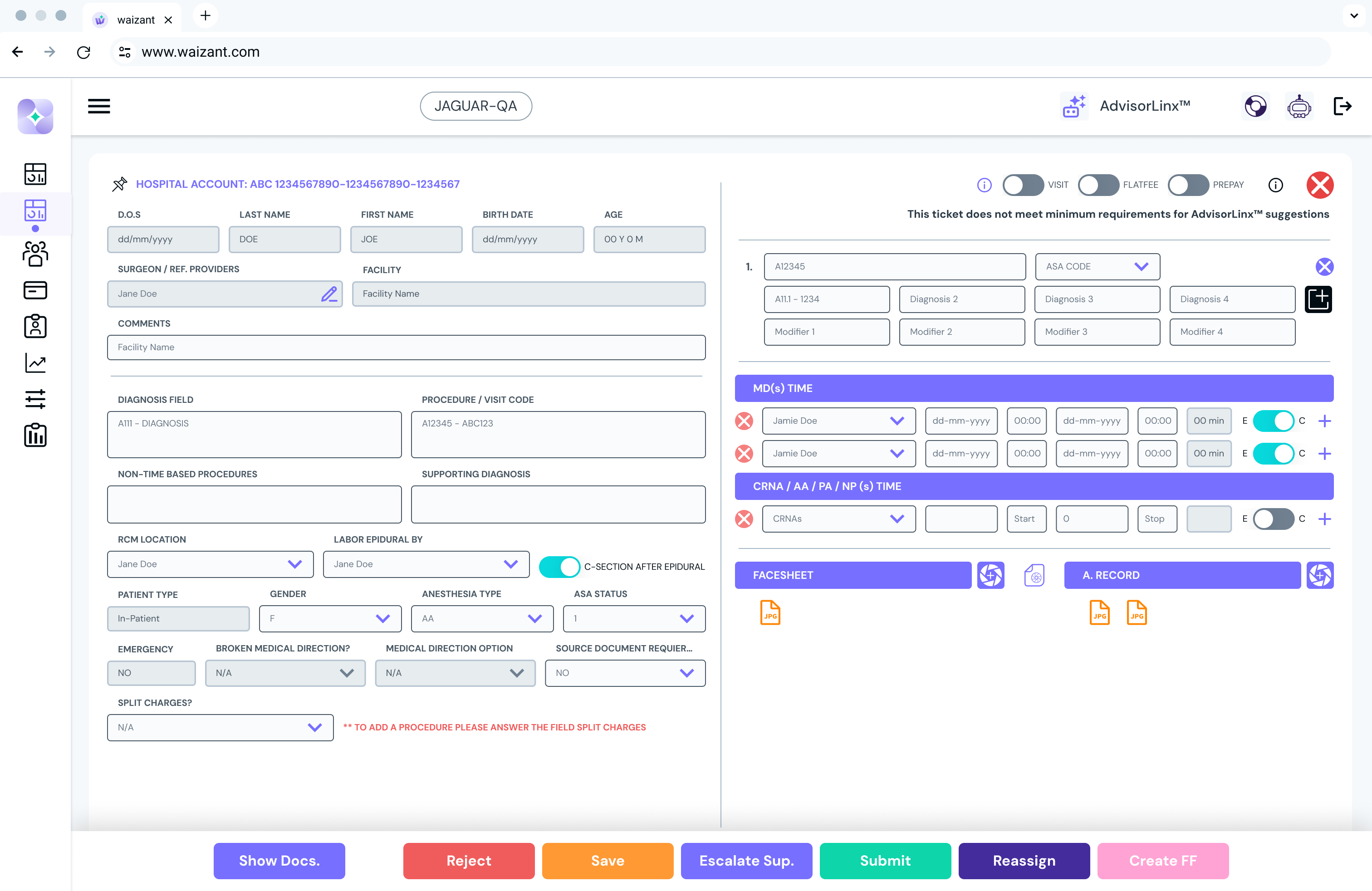
For practices that want better visibility into the operational and compliance data behind these metrics, WaizantTM helps bring critical workflows into one place. From MIPS-related reporting support to documentation, scheduling, mileage logging, and revenue cycle tools, WaizantTM is built to support the day-to-day realities of running an anesthesia practice.
Book your Free Trial today at: waizant.com/free-trial
.png)