 The Real Reason Your Claims Are Getting Denied">
Discover the real reasons healthcare claims get denied and how to fix them faster with smarter operations, automated data capture, and real-time RCM visibilit
Claim denials are one of the biggest hidden threats to healthcare revenue.
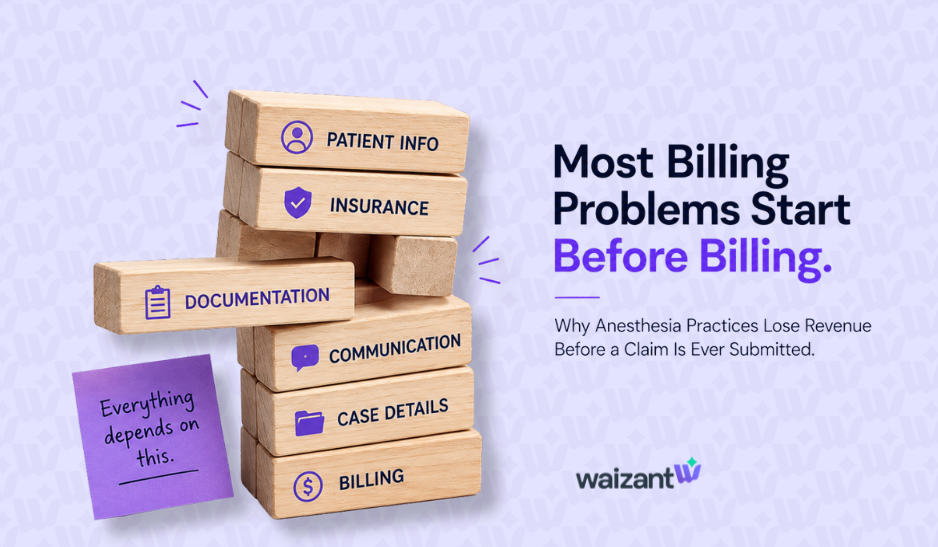
Most organizations assume denials happen because of billing mistakes at the end of the process. In reality, denied claims usually begin much earlier, often at intake, documentation, or workflow handoff points.
Every denial creates more than delayed reimbursement. It creates rework, administrative burden, cash flow disruption, and operational inefficiency.
Modern Revenue Cycle Management (RCM) is no longer just about submitting claims. It’s about preventing friction before it reaches the billing stage.
Why Claim Denials Happen
1. Incomplete or Inaccurate Patient Data
Many denials stem from disconnected systems, manual processes, and incomplete data collection.
The most common causes include:
- Missing or inaccurate patient information
- Missing documentation
- Eligibility verification failures
- Coding and modifier errors
- Incomplete provider documentation
- Authorization gaps
- Filing deadline issues
- Manual workflow breakdowns
Most of these issues are preventable.
The Hidden Cost of Denials
Denied claims impact far more than billing teams.
They affect:
- Cash flow
- Staff productivity
- Days in AR
- Provider efficiency
- Patient experience
- Executive visibility
When teams spend time correcting preventable errors, operational performance slows down across the organization.
Where Denials Actually Start
1. Front-End Data Collection
Small intake mistakes create downstream revenue problems.
Common issues:
- Incorrect insurance information
- Missing demographics
- Incomplete eligibility checks
- Manual entry errors
How to Fix It
Use automated intake workflows and point-of-entry validation to capture accurate information before claims are created.
2. Delayed or Incomplete Documentation
When documentation is inconsistent or delayed, billing accuracy suffers.
Common issues:
- Missing provider notes
- Missing Ultrasound Images
- Delayed charge entry
- Incomplete encounter documentation
How to Fix It
Implement mobile-first workflows that allow providers to capture data in real time at the point of care.
3. Coding and Modifier Errors
Coding inconsistencies remain one of the largest denial drivers.
Common issues:
- Incorrect CPT codes
- Missing modifiers
- Incomplete documentation support
How to Fix It
Use automated claim review tools and standardized workflow validation before submission. See where there can be checks and balances before you submit.
4. Lack of Operational Visibility
Many healthcare organizations operate without real-time insight into denial trends or workflow bottlenecks.
Without visibility, leadership reacts after revenue has already been impacted.
How to Fix It
Use live dashboards to monitor:
- Denial rates
- First-pass acceptance rates
- AR aging
- Lag days
- Productivity trends
Why Traditional RCM Workflows Struggle
Many healthcare organizations still rely on:
- disconnected systems
- spreadsheets
- paper processes
- manual reconciliation
- outsourced dependency
As volume grows, complexity grows with it.
Adding more staff does not always solve operational friction.
Smarter operations and better systems do.
How Automation Changes the Equation
Modern RCM platforms reduce denials by improving workflow accuracy from the start.
Key operational advantages include:
Automated Data Capture
Reduce manual entry and improve front-end accuracy.
Workflow Intelligence
Move claims faster with fewer handoffs.
Real-Time Analytics
Identify issues before they become revenue problems.
Denial Prevention
Catch errors before submission.
Scalable Operations
Handle more volume without proportional labor growth.
How Waizant™ Supports Smarter Revenue Operations
Waizant™ is an all-in-one healthcare operations platform designed to simplify Revenue Cycle Management.
It helps organizations:
- Capture clean data at the source
- Streamline documentation workflows
- Improve operational visibility
- Reduce manual administrative work
- Track revenue performance in real time
- Improve claim accuracy and efficiency
- Improve claim completeness
- Add a layer of checks and balances
Instead of reacting to denials after they happen, Waizant™ helps practices prevent operational breakdowns before revenue is impacted.
See Where Revenue Is Slowing Down
Waizant™ helps healthcare organizations reduce claim denials, improve operational visibility, and streamline revenue workflows—all within one connected platform.
The Shift Healthcare Organizations Need to Make
Denied claims are rarely isolated billing problems.
They are usually symptoms of larger workflow inefficiencies.
Organizations that improve operational visibility, automate repetitive tasks, and capture accurate data earlier in the process create stronger financial performance across the entire revenue cycle.
The future of RCM is not more manual work.
It is cleaner workflows, smarter automation, and better operational alignment.
Claim Denial FAQ
What is the most common reason for claim denials?
Incomplete patient information, eligibility issues, and coding errors are among the most common causes.
How can healthcare organizations reduce claim denials?
Organizations can reduce denials by improving front-end data capture, automating workflows, and using real-time validation tools.
What is first-pass claim acceptance?
First-pass acceptance measures how many claims are successfully accepted on initial submission without needing correction or resubmission.
Why do denied claims hurt cash flow?
Denied claims delay reimbursement, increase administrative workload, and slow overall revenue collection.
How does automation improve Revenue Cycle Management?
Automation reduces manual errors, speeds up workflows, improves data accuracy, and helps organizations identify issues earlier in the revenue cycle.
Ready to Reduce Claim Denials?
See how Waizant™ helps healthcare teams automate workflows, improve claim accuracy, and create cleaner revenue operations.
.png)