Being a CRNA means balancing patient care with documentation, communication, compliance, and everything in between.
Being a CRNA means balancing patient care with documentation, communication, compliance, and everything in between.
While every minute in the OR matters, many anesthesia professionals still spend valuable time on tasks that don't directly impact patient care.
The good news? Many of those everyday frustrations aren't just part of the job. They're opportunities to work smarter.
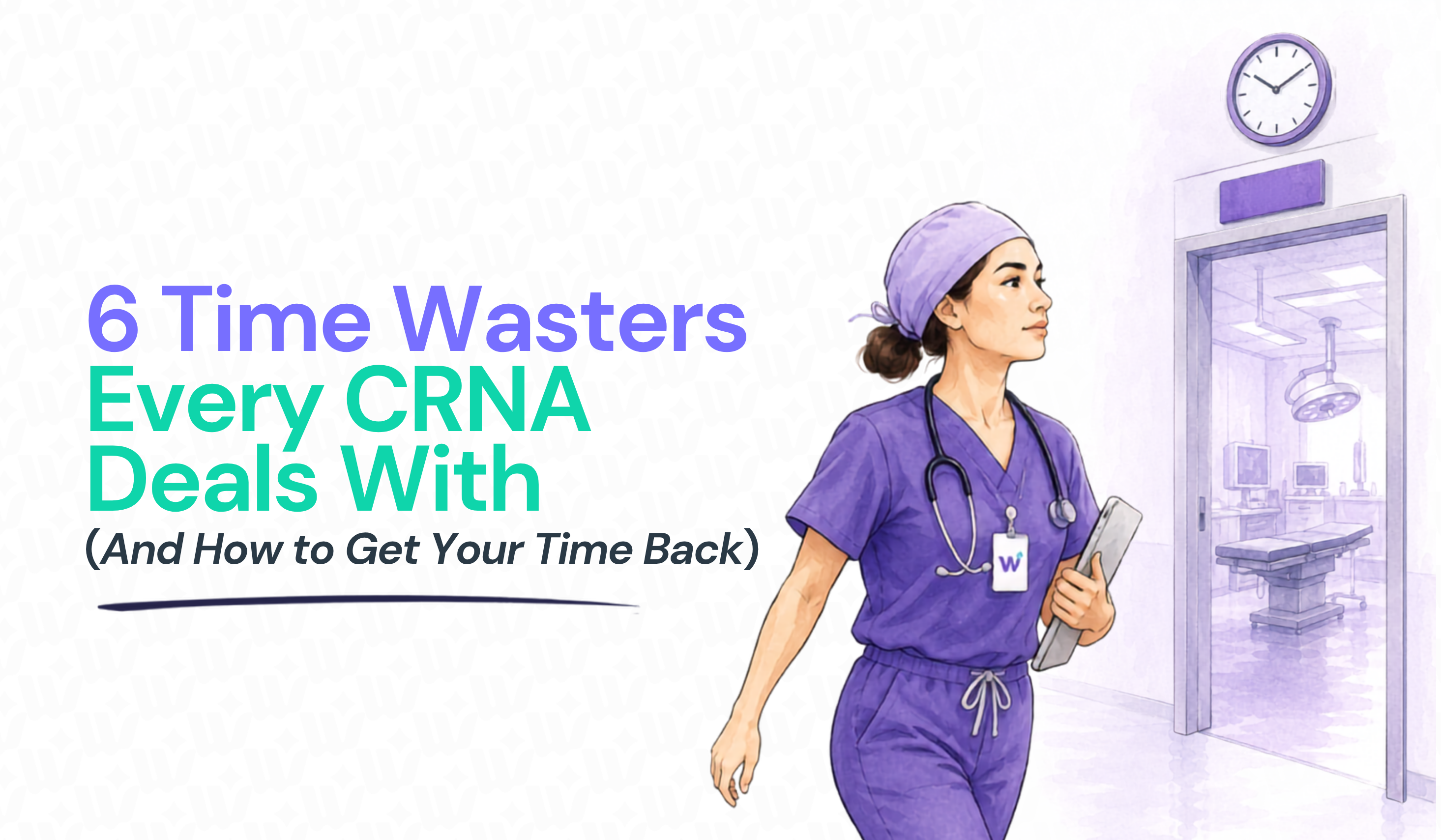
Here are six of the biggest time wasters CRNAs face and how connected technology can help eliminate them.
1. Charting After the Case Instead of During It
It's a familiar routine. The case is over, but the documentation isn't.
Trying to remember medication times, procedures, and case details hours later isn't just frustrating. It also increases the risk of missed information.
A better approach: Capture information in real time while it's happening, so documentation is more accurate and less time-consuming. With Waizant™, charting happens alongside the case instead of after it, eliminating the need to reconstruct details from memory at the end of a long shift.
2. Chasing Down Missing Billing Information
Incomplete documentation can create delays long after the patient leaves the OR.
Missing procedure details, diagnosis codes, or charge information often leads to additional follow-up, delayed billing, and unnecessary administrative work. As we've covered before, most billing problems start before billing ever happens. They start with what gets captured, or missed, during the case itself.
A better approach: Capture billing information at the point of care so everything needed is ready when the case is complete. Waizant's Collection Form flows directly into the Billing Report, helping reduce manual follow-up and missed charges.
3. Switching Between Multiple Apps
One application for communication.
Another for documentation.
Another for files.
Another for billing.
Constantly switching between systems interrupts your day and adds unnecessary clicks. For many practices, critical information is spread across multiple platforms, making even simple tasks take longer than they should.
A better approach: Bring communication, documentation, billing, and operational information together in one place so your team spends less time navigating software and more time focused on patient care.
4. Searching for Documents
Policies.
Protocols.
Credentialing records.
Training materials.
When documents are scattered across folders, email, or shared drives, finding the right file becomes another task on your to-do list.
A better approach: Store important documents in one secure, cloud-based location that's accessible whenever you need them. No digging through inboxes. No searching network drives. No wondering who has the latest version.
5. Waiting on Answers
Whether it's clarifying a procedure, asking a billing question, or tracking down information, delays in communication slow everyone down.
The longer it takes to get an answer, the longer it takes to move forward.
A better approach: Keep conversations connected to the work that's already happening with secure, real-time messaging instead of relying on separate inboxes, text messages, or phone calls.
6. Doing the Same Work Twice
Few things are more frustrating than entering the same information into multiple systems.
Duplicate documentation not only wastes time, but also increases the chance of errors and inconsistencies.
A better approach: Choose technology that lets information flow where it's needed without duplicate data entry. Enter it once, then let it populate everywhere it belongs.
Small Improvements Add Up
None of these tasks seem overwhelming on their own.
But together, they can take hours out of every week.
Reducing unnecessary clicks, eliminating duplicate work, improving communication, and making information easier to access helps CRNAs spend less time managing paperwork and more time focused on patient care.
Because the goal isn't to work faster.It's to remove the work that never needed to be there in the first place.
How Waizant™ Helps
Waizant™ was built to simplify the work surrounding every case. By bringing communication, documentation, charge capture, cloud-based storage, and operational visibility into one secure platform, teams spend less time switching between systems and more time focused on patient care.
Whether it's charting in real time, capturing charges at the point of care, securely accessing documents, or communicating with the care team, Waizant™ helps eliminate many of the small inefficiencies that add up throughout the day.
Want to see how it works? Schedule an introductory call and see how Waizant™ fits into your practice.
Frequently Asked Questions
Why do CRNAs spend so much time on documentation?
Documentation often continues after the case because information is captured manually or across multiple systems. Capturing information in real time can help reduce end-of-shift charting and improve accuracy.
How can anesthesia practices reduce administrative work?
Connected technology, streamlined documentation, secure communication, cloud-based document storage, and integrated charge capture can eliminate many repetitive administrative tasks.
Why is charge capture important?
Capturing billing information during the case helps reduce missed charges, improves accuracy, and speeds up the billing process.
What technology should modern anesthesia practices use?
Look for technology that simplifies documentation, improves communication, reduces duplicate work, centralizes important information, and supports your team without adding complexity.
Ready to Simplify Healthcare Operations?
See how Waizant™ brings communication, documentation, billing, and operational visibility together in one secure, self-service platform.
Why do CRNAs spend so much time on documentation?
Documentation often continues after the case because information is captured manually or across multiple systems. Capturing information in real time can help reduce end-of-shift charting and improve accuracy.
How can anesthesia practices reduce administrative work?
Connected technology, streamlined documentation, secure communication, cloud-based document storage, and integrated charge capture can eliminate many repetitive administrative tasks.
Why is charge capture important?
Capturing billing information during the case helps reduce missed charges, improves accuracy, and speeds up the billing process.
What technology should modern anesthesia practices use?
Look for technology that simplifies documentation, improves communication, reduces duplicate work, centralizes important information, and supports your team without adding complexity.
Ready to Simplify Healthcare Operations?
See how Waizant™ brings communication, documentation, billing, and operational visibility together in one secure, self-service platform.
Continue Reading
If you enjoyed this article, you may also like:
Healthcare Operations
Healthcare Technology
Administrative Burden
Healthcare Communication
Cloud Storage
Document Management
CRNA
.png)