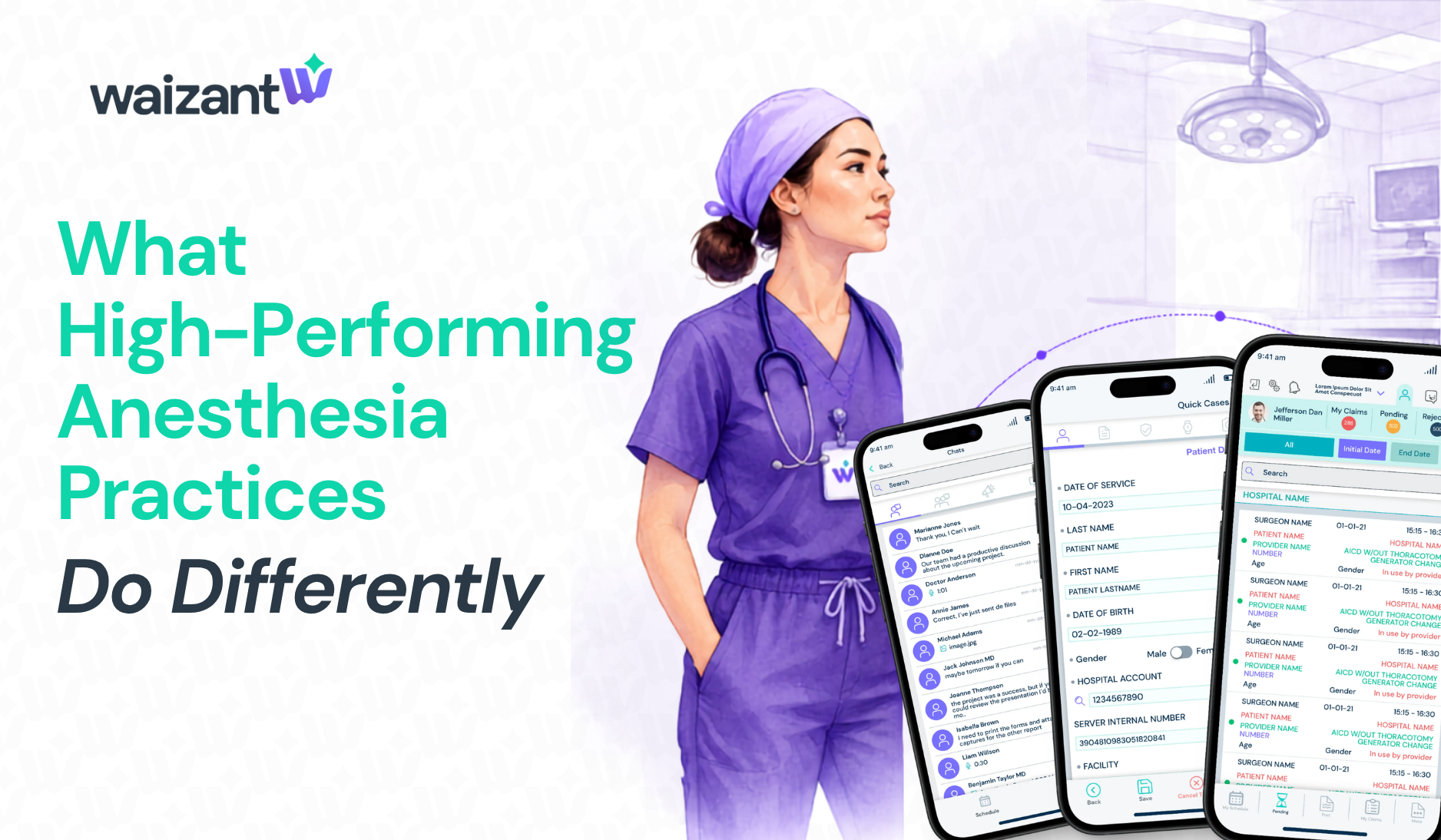

Surgical centers face a growing gap between what anesthesia services cost and what payers reimburse. That gap puts your billing operations under a microscope, especially when HIPAA compliance is part of the equation. If your center is evaluating anesthesia medical billing software, knowing what to look for in a HIPAA-compliant platform can save you months of trial-and-error and protect your bottom line.
This article covers the key factors surgical center administrators and anesthesia practice leaders should consider when choosing a billing platform built for anesthesia. From encryption standards and audit trails to charge capture and denial management, Waizant™ helps you understand what matters most before you commit.
Key Takeaways: What Surgical Centers Should Know About Anesthesia Billing
- HIPAA-compliant billing platforms must include encryption, access controls, and detailed audit trails to protect patient data.
- Anesthesia-specific billing logic handles time-based units, modifiers, and base-unit calculations that general systems miss.
- Real-time charge capture reduces the charge lag that leads to lost revenue and delayed reimbursement for surgical centers.
- Waizant™ gives surgical centers a HIPAA-compliant billing platform built specifically for anesthesia case tracking.
- Denial management tools that flag coding errors before claim submission improve first-pass acceptance rates significantly.
Factors Surgical Centers Should Evaluate in Anesthesia Billing Platforms
1. HIPAA-Compliant Data Encryption and Storage
Every billing platform you evaluate should encrypt patient data both in transit and at rest. Look for AES-256 encryption and TLS 1.2 or higher as minimum standards. These aren't optional features. They're baseline requirements for protecting protected health information in any surgical center environment.
Your platform should also store data in SOC 2 Type II-certified environments. According to a 2025 IBM report, the average cost of a healthcare data breach is $7.42 million. That number alone makes encryption standards a non-negotiable evaluation criterion.
2. Role-Based Access Controls and Audit Trails
Not everyone on your team needs access to every patient record. Role-based access controls let you limit what each staff member can view or edit based on their job function. This significantly reduces the risk of accidental data exposure and simplifies compliance audits for your surgical center.
Audit trails matter just as much. Your billing platform should log every action taken on patient records and claims, including who made changes and when. These logs become critical evidence during internal reviews, payer inquiries, and regulatory audits.
3. Anesthesia-Specific Billing Logic
Anesthesia billing operates on a time-based model that general billing platforms don't always support correctly. Your platform needs to calculate base units, time units, and modifiers accurately for every procedure. Even small miscalculations can trigger claim denials or underpayments that add up quickly.
Look for systems that apply anesthesia-specific coding rules automatically. Waizant™ offers billing logic designed around anesthesia procedures, including built-in compliance checks that flag potential errors before a claim ever reaches the payer for adjudication.
4. Real-Time Charge Capture and Case Tracking
Charge lag is one of the biggest revenue risks for surgical centers. When billing data sits for days before being entered, cases get missed and reimbursements stall. A platform with real-time charge capture closes that gap by recording billing data the moment each case happens.
Waizant™ captures every anesthesia case from the moment it's scheduled through to final billing, with automated alerts for unbilled cases. This kind of always-on, end-to-end visibility is essential for surgical centers managing high daily case volumes.
5. Automated Claim Scrubbing and Denial Management
Submitting a claim with a coding error costs your center time and money. Automated claim scrubbing tools review each claim against payer-specific rules before submission, catching errors that would otherwise result in rejections. This is where first-pass acceptance rates improve dramatically.
Your denial management tools should also help you identify patterns. Are certain payers rejecting claims at higher rates? Are specific procedure codes triggering errors? The ability to spot trends early means you can fix root causes rather than chasing individual denied claims.
6. Integration with Existing Clinical Systems
Your billing platform shouldn't operate in isolation. It needs to connect with your scheduling system, electronic health records, and practice management tools. When clinical documentation flows directly into the billing process, you reduce manual data entry and the costly errors that come with it.
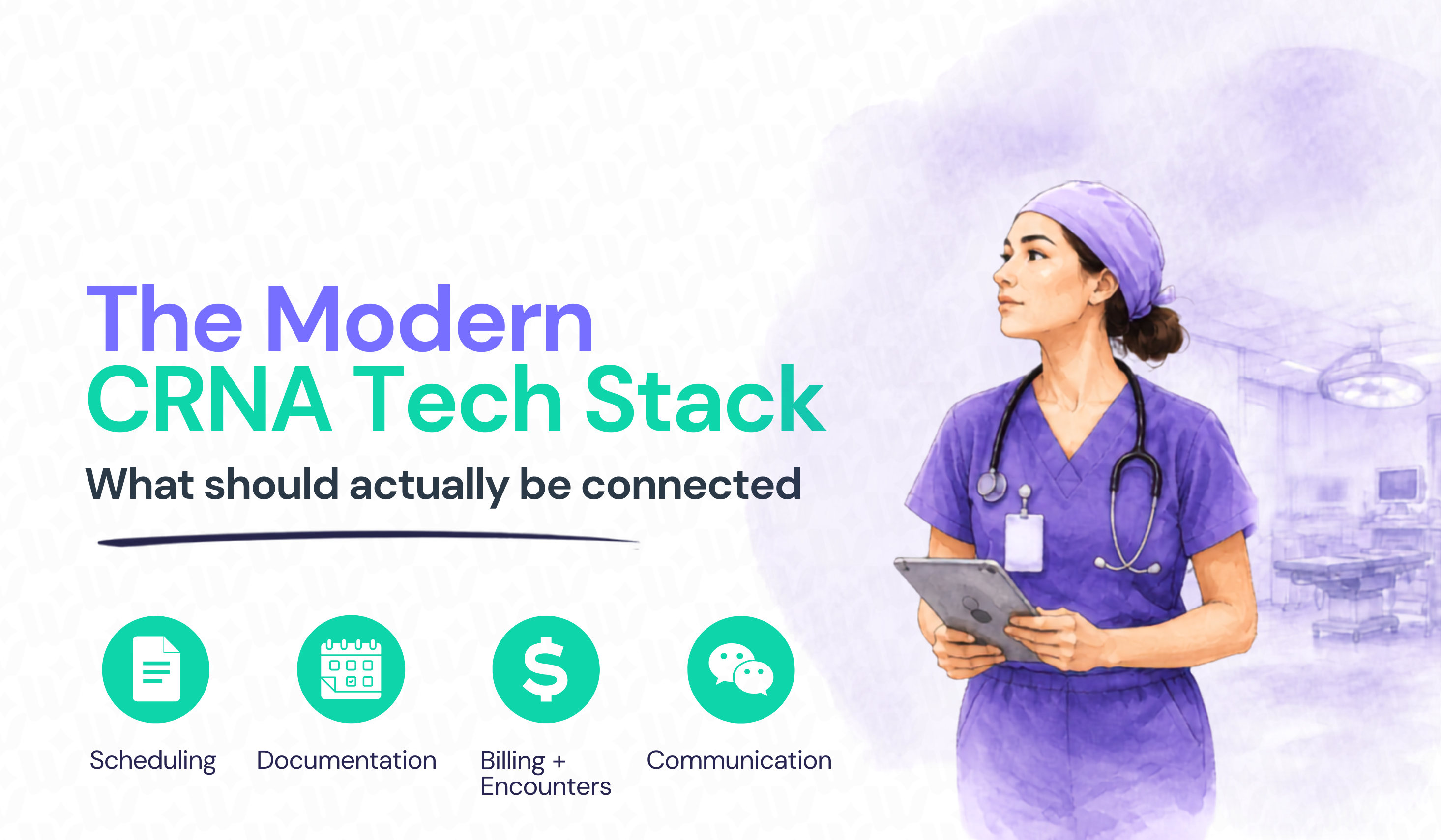
The Waizant™ Platform ties scheduling, case tracking, and billing into a single connected system. This removes the need to toggle between disconnected applications and keeps your entire revenue cycle moving forward with fewer handoff gaps.
7. Reporting and Revenue Cycle Analytics
You can't manage what you can't measure. Your billing platform should give you clear visibility into claim status, reimbursement timelines, denial rates, and overall financial performance. Anesthesia-specific KPI dashboards let you track the metrics that matter for your specialty.
General healthcare analytics platforms often fall short for anesthesia. They tend to focus on broad clinical metrics instead of the billing and operational data your practice needs. Waizant™ delivers anesthesia-focused analytics that help you make decisions grounded in your center's real performance data.
8. Scalability and Self-Service Access
Your billing needs will grow as your surgical center adds providers, locations, or case types. The platform you choose today should scale with you. Look for subscription-based SaaS models that let you add users or modules without overhauling your entire system.
Self-service access is equally important. Your billing team should be able to pull reports, review case status, and manage claims without relying on a vendor. Waizant™ gives your team direct access to the tools they need, on their own schedule.
Why Waizant™ Is the Best Billing Platform for Surgical Centers
Choosing a billing platform is one of the most consequential decisions your surgical center will make. The right system protects your patient data, captures every billable case, and keeps your revenue cycle running without gaps.
Waizant™ gives you an all-in-one HIPAA-compliant platform built specifically for anesthesia billing. From automated case tracking and real-time charge capture to denial management and anesthesia-focused analytics, it's designed to solve the exact challenges surgical centers face every day. If you're ready to stop patching together disconnected tools and start operating with full visibility, reach out to Waizant™ to see how the platform fits your center.
FAQs about What Surgical Centers Should Know About Anesthesia Billing
what makes anesthesia billing different from general medical billing?
Anesthesia billing relies on time-based unit calculations, base units, and specific modifiers tied to each procedure. General billing platforms often lack the logic needed to handle these calculations accurately, which leads to coding errors and denied claims.
Why does HIPAA compliance matter for anesthesia billing software?
Anesthesia billing involves processing sensitive patient health information with every claim. HIPAA-compliant platforms protect that data through encryption, access controls, and audit trails, reducing the risk of costly data breaches and regulatory penalties.
How does Waizant™ help surgical centers reduce charge lag?
Waizant™ tracks every anesthesia case from scheduling through billing in real time. Automated alerts flag unbilled cases so nothing slips through. This end-to-end tracking helps your center capture revenue faster and with fewer missed cases.
What should surgical centers look for in a billing platform's reporting tools?
Look for dashboards that display anesthesia-specific metrics such as denial rates by payer, reimbursement timelines, and claim acceptance rates. General analytics often overlook the granular data anesthesia practices need to optimize their billing operations.
Can anesthesia billing software integrate with existing EHR systems?
Yes. A strong billing platform connects directly with your scheduling tools, EHR, and practice management systems. This integration reduces duplicate data entry, minimizes errors, and keeps billing aligned with clinical documentation.
How do automated claim scrubbing tools improve revenue for surgical centers?
Automated scrubbing reviews each claim for coding errors and missing information before submission. Catching mistakes early improves first-pass acceptance rates and reduces the time your team spends on rework and appeals.